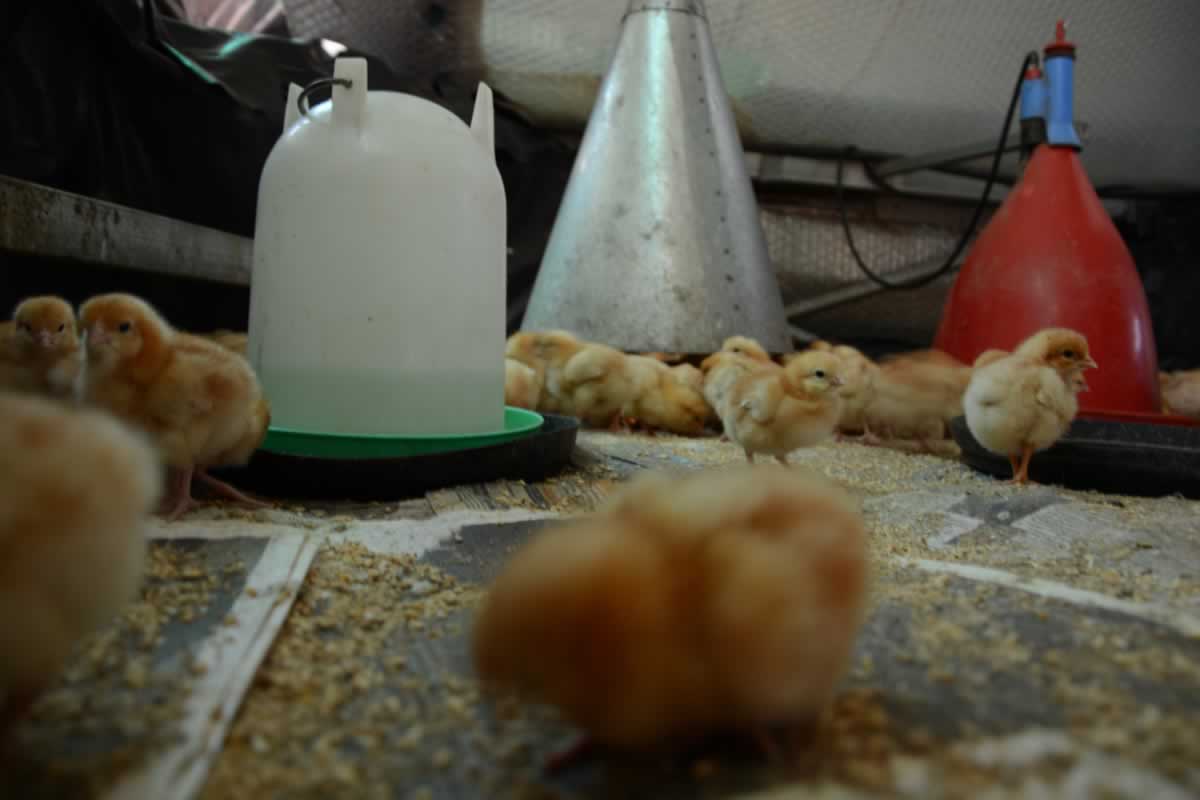
The day old chicks of the Lohman variety, are raised in our very large insulated and temperature controlled brooder shed until they grow big enough (around 6-10 weeks) to be housed in the grower run shelters. This gives complete protection from any predator. This is also the only time in their life that they are actually housed in a shed
Organigrow chicks are not de-beaked prior to coming to the farm, and at Organigrow we will never de-beak any chicks or hens.
Once moved into the grower runs, the many shady trees and cover from tall growing crops offer protection from eagles and in the open areas for the younger hens, bird netting is used to protect the flock from aerial predators. Feral dogs and foxes are controlled by electric fencing. This also controls the grazing area of the hens so that cell grazing strategies can be employed to maximise pasture growth. Our farm has carpet snakes, eagles, and hawks, which occasionally take off with a chicken- but such are the hazards of being able to peck freely outside. For this reason, three Maremma (Italian flock guard-dogs) protect our hens. These are pure breeds dogs dedicated to watching and protecting the stock. They have developed an amazing relationship with the hens. The dogs watch and protect the hens, and when the dogs were younger, the hens often groomed seeds and burs out of their coats.
While hens roam free, they naturally eat insects, we believe they should not be fed meat meal, which is an ingredient in most poultry feed (including many organic feeds). Organic chickens are not fed antibiotics, chemical infested or Genetically Modified (GM ) feed. We feed our hens a mix of the highest quality certified organic vegetarian whole grains from our five silos containing a different variety each, but as we believe organic free-range chickens must have access to green peck, our chickens eat lots of grass, insects, leaves, fruit from the farm etc.
Unfortunately, although all free-range chickens get a chance to go outside, this does not mean that they really get green peck or even see a tree. Under the free-range standards, ” free range” chicken only really require a yard – even if that yard is a small bare earthen patch. The Organigrow farm is organically certified which means that even the soil that the chickens scratch in will not be filled with herbicides, insecticides or other chemicals, which is essential as an egg is a concentrate of what the chicken which laid it has eaten. Let a chicken have plenty of green peck, i.e leaves, grass etc, by being in a pasture – means that the egg that is laid will have naturally golden yolks and be filled with all the goodness of natural greenery. No artificial colors needed here.